
As a staunch and active opponent of the death penalty since 1970, I believe that Pete Hegreth’s plan to telecast the firing squad execution of former U.S. Army Major Nidal Hasan on December 3, 2026, will advance the cause of abolishing government executions in the United States. Something that almost happened in the 1970s and effectively happened in some states and local jurisdictions, though the penalty remains on the books in those places like criminal penalties for extramarital sex.

Christa Pike
It’s too bad that Tennessee’s attempt to execute Christa Pike on September 30, 2026, was not televised, because mass viewing of the state torturing Pike while failing to kill her might have, even more than the planned Hasan public execution, advanced the cause of abolition.
The fortuitous temporal collision of these two planned executions has provided necessary context for the public debate about whether “The People” should kill people in cold blood. And it has put a spotlight on several fallacies that dominate the debate about the death penalty. A debate that in the late 1960s had a slim majority of Americans opposed and today has a slim majority in favor.
One fallacy is that the death penalty is a deterrent. That it has not deterred murderers (the only criminals now “eligible”) is obvious. A second fallacy is that deterrence is the main rationale for the penalty. Given the crime stats that demonstrate the lack of deterrence, the other two justifications, punishment and societal revenge, are now emphasized by death penalty proponents.

Nidal Hasan
As for punishment, we know that lots of murderers actually hope to die during the commission of their crimes and after they have been convicted. Dr. Hasan must have assumed he would die while he was murdering 13 of his fellow soldiers and grievously wounding another 32. Perhaps after screaming Allahu Akbar he looked forward to meeting 72 virgins in Paradise. Instead, he was shot and has lived for 17 years as a paraplegic in one of those well-appointed American prisons. It’s not a stretch to assume he can’t wait until December 3rd puts him out of his misery.
Having represented many inhabitants of maximum-security prisons in civil rights cases, including a few convicted of a homicide, the die rather than life in prison point of view while not ubiquitous is not rare.
The only rationale for the penalty that clearly is served is societal revenge. But in this case, the revenge imposes a penalty that the murderer often seeks while committing the crime and often favors relative to the life without parole alternative. And it squarely raises the question of what type of society we aspire to be.
Shocking how many otherwise intelligent commentators have recently invoked Osama bin Laden’s name, as in “didn’t you think executing bin Laden was a good thing?” Michael Smerconish asked abolitionists that question repeatedly on his radio and CNN programs. He didn’t ask me, but yes like most I cheered and was cheered up when our Navy Seals killed bin Laden. But that was a military operation, not the death penalty after due process. Such inapposite equations are common among death penalty proponents.
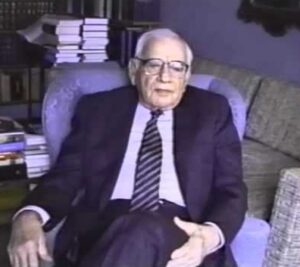
Herbet Wechsler
I started examining this issue seriously one day during a “crim” class while in law school. The professor, who had authored the then leading analysis titled “A Rationale for the Law of Homicide” (Wechsler and Michael, 1937) off-handedly mentioned that he had spent a significant portion of his last 40 years trying to get the death penalty abolished. That didn’t instantly make me an abolitionist, but sent me off to study the pros and cons. Because this professor, who had been described by another professor saying “if he were alone in a boat out at sea that vessel would be a top-tier law school” cared enough to pursue this goal for 40 years with a Moses-like tenacity.
Soon after SCOTUS decided Furman v. Georgia, a 1972 decision that held unconstitutional every state and federal death penalty statute, without ruling that any future death penalty would be unconstitutional. We literally danced in the hallways when that decision was announced over the law school’s PA system – naively thinking the states would not enact new ones. And the world continued to turn during the 4.5 years between the Furman decision and the next execution, of Gary Gilmore on January 17, 1977. This was chronicled by Norman Mailer in “The Executioner’s Song” awarded the Pulitzer Prize. Gilmore refused to appeal, demanding the earliest possible execution by firing squad. Another example of the hope to die murderers.

George H.W. Bush & Michael Dukakis
The next event in this abolitionist’s journey came during the 1988 presidential debates between Gov. Mike Dukakis and Vice President George H.W. Bush, when debate moderator Bernard Shaw asked Dukakis if he would change his opposition to the death penalty if his wife, Kitty, were raped and murdered. Dukakis answered with a preachy policy focused response, delivered without emotion. And that was the end of his campaign, which had him up by 19 points two months earlier. Had he just responded with something like “if I could get my hands on the bastard, I’d kill him myself, but the death penalty involves society killing people in cold blood and that debases us without producing any law enforcement benefit.” That sort of response would have made the point about the difference between personal and societal revenge and why we don’t permit the former.
So yes, I will watch and would also have watched Christa Pike being tortured – all done in my name and yours. So, I recommend that you watch too.

0 Comments